Spider Plant (Chlorophytum comosum) – A Complete Care Guide
The Spider Plant is a well-loved, resilient indoor plant with unique arching leaves and tiny “spiderettes” that dangle from the mother plant. Below is a comprehensive guide to its care, making it easy to include in your article:
1. Light Requirements
- Ideal Light: Spider Plants thrive in bright, indirect light but can also tolerate lower light conditions.
- Avoid Direct Sunlight: Direct sunlight may scorch the leaves, causing brown spots.
- Low Light Tolerance: While it does best in bright light, Spider Plants can adapt to medium to low light, making them suitable for areas with less direct sunlight, such as bedrooms or hallways.
2. Watering Needs
- Watering Frequency: Spider Plants prefer to be kept slightly moist, but they do not like being waterlogged.
- Watering Schedule: Water when the top 1-2 inches of soil feel dry. During the warmer months, this may be every 1-2 weeks, and less often during winter.
- Watering Tip: Use room-temperature water. If your water is hard (high in salts), consider using distilled or filtered water to avoid leaf tips browning.
- Overwatering: Spider Plants are sensitive to overwatering, which can cause root rot. Ensure the pot has good drainage.
3. Temperature and Humidity
- Temperature Range: Spider Plants thrive in average indoor temperatures of 60°F to 75°F (16°C to 24°C).
- Cold Sensitivity: They are sensitive to cold temperatures and should be kept away from drafts or air conditioning.
- Humidity: They prefer moderate to high humidity, but they will tolerate average indoor humidity levels.
- Ideal Placement: A bathroom with natural light can work well due to the higher humidity.
4. Soil Type
- Ideal Soil: Spider Plants prefer well-draining soil. A general potting mix works fine, or you can add perlite to improve drainage.
- Soil pH: They prefer slightly acidic to neutral soil with a pH of 6.0-7.0.
- Drainage: Always ensure that the pot has drainage holes to avoid waterlogging.
5. Potting and Repotting
- Pot Type: Spider Plants do well in plastic or terracotta pots with good drainage holes.
- Repotting: They grow quickly and should be repotted every 1-2 years or when the roots outgrow the container. Choose a pot that’s about 1-2 inches larger than the current pot.
- Potting Mix: Use a well-draining potting mix, or a mix of standard potting soil and perlite for better drainage.
6. Aesthetic Appeal
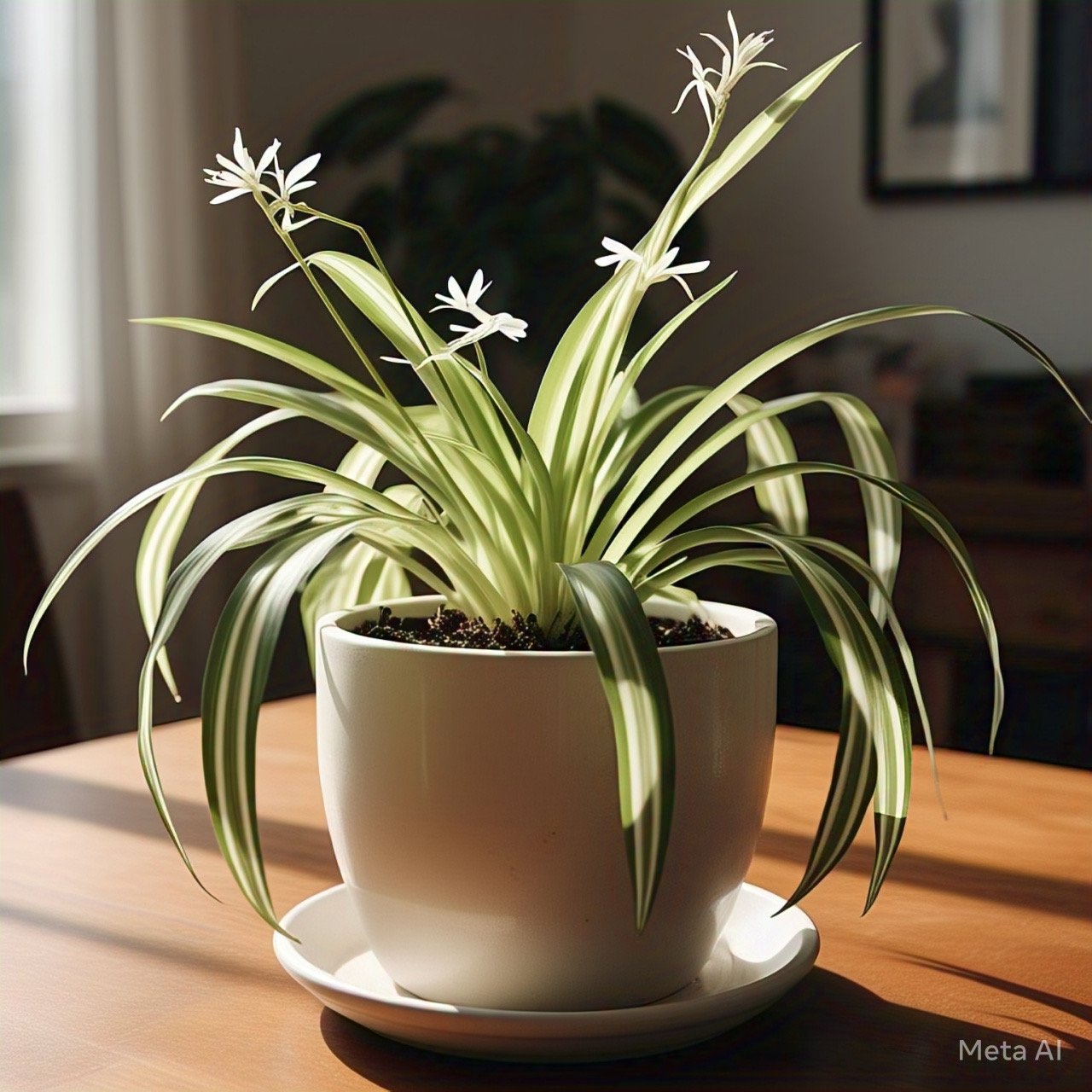
- Stylish Factor: The Spider Plant has long, arching, green leaves with white or yellow stripes that add a dynamic, cascading look to any room. The baby plantlets (or “spiderettes”) hanging from long stems give the plant a unique, airy appearance.
- Plant Shape: The cascading effect of the plant makes it ideal for hanging baskets, shelves, or plant stands where its long leaves can trail down.
- Versatile Decoration: Its attractive form makes it an ideal fit for various décor styles, from modern and minimalist to boho and eclectic.
7. Maintenance Level
- Easy Maintenance: Spider Plants are known for being low-maintenance and are perfect for beginners.
- Cleaning: Wipe the leaves occasionally to remove dust, as dusty leaves can hinder the plant’s ability to absorb light.
- Pruning: Trim the dead or yellowing leaves and cut off any spent flower stalks. You can also remove the “spiderettes” if you prefer a tidier appearance, though they are an important part of the plant’s reproduction.
8. Air Purifying Qualities
- Air Purification: Spider Plants are excellent air purifiers and have been found to remove toxins like formaldehyde, benzene, and xylene from the air.
- Health Benefits: By purifying the air, they help improve indoor air quality, making them a great choice for homes and offices.
9. Vastu or Feng Shui Compatibility
- Vastu: According to Vastu Shastra, the Spider Plant is considered to bring positive energy into the home. It is believed to promote health and vitality.
- Feng Shui: In Feng Shui, the Spider Plant is considered lucky and is associated with growth, health, and abundance. It’s best placed in the wealth corner (southeast) or health area (east) to attract positive energy.
10. Seasonal Considerations
- Spring and Summer: During the warmer months, Spider Plants experience active growth. You can increase watering and occasionally fertilize to support this growth.
- Winter: In the colder months, Spider Plants slow down and need much less water. Be sure to reduce watering frequency to avoid root rot.
- Growth Slowing: During winter, keep the plant away from drafts or heat sources, as drastic temperature changes can stress the plant.
11. Special Considerations
- Toxicity: Spider Plants are non-toxic to humans and pets. This makes them a great choice for homes with children and animals.
- Propagation: The plant produces “spiderettes” or small plantlets at the tips of long stems. These can be propagated by cutting the plantlets off and placing them in water or soil until they form roots.
- Flowering: Spider Plants occasionally produce small white flowers on long stems, though this is more common with mature plants.
- Spiderettes: If you prefer a tidier look, you can prune or trim the spiderettes, but they can also be left to grow if you wish to propagate new plants.
12. Pet-Friendly Status
- Pet-Friendly: Spider Plants are safe for pets. They are non-toxic and pose no risk if ingested by dogs, cats, or other animals.
- Precaution: Although not harmful, pets may be attracted to the long, dangling spiderettes. Some pets may chew on the leaves or plantlets, but it won’t harm them.
13. Fertilization and Nutrition Requirements
- Fertilizing Needs: Spider Plants are light feeders, and excessive fertilization can lead to burnt leaf tips. Fertilize lightly once a month during the growing season (spring and summer) with a balanced liquid fertilizer diluted to half strength.
- Winter Care: During the winter months, when the plant is dormant, avoid fertilizing.
- Nutrient Requirements: Spider Plants benefit from potassium, phosphorus, and a small amount of nitrogen. Too much nitrogen can cause excessive leaf growth at the expense of flowers and babies.
14. Growth and Size
- Growth Rate: Spider Plants grow relatively fast and can reach up to 12-24 inches (30-60 cm) in height.
- Size and Spread: Spider Plants can spread up to 2 feet (60 cm) wide as they develop new plantlets.
- Propagation: You can propagate the plant by cutting the baby plantlets (spiderettes) and rooting them in water or soil. This allows you to grow more plants from the original.
15. Common Problems and Troubleshooting
- Yellowing Leaves: Yellowing leaves are usually a sign of overwatering or too much direct sunlight. Check for waterlogged soil, reduce watering, and move the plant to a spot with indirect light.
- Brown Leaf Tips: Brown tips on the leaves are often caused by over-fertilizing, low humidity, or hard water. Reduce fertilizer and use distilled or filtered water.
- Stunted Growth: If the plant’s growth seems slow, it may need more light or should be repotted into fresh soil.
- Drooping or Limp Leaves: This can indicate underwatering. Water the plant thoroughly and ensure the soil has good drainage.
- Pests: Spider Plants are generally pest-resistant but may occasionally suffer from spider mites, aphids, or mealybugs. Treat with insecticidal soap or neem oil to eliminate pests.
16. Plant Compatibility
- Companion Plants: Spider Plants are great in mixed plant displays and are compatible with many other indoor plants such as:
- Snake Plant (Sansevieria)
- Peace Lily (Spathiphyllum)
- Pothos (Epipremnum aureum)
- Aloe Vera
- ZZ Plant (Zamioculcas zamiifolia)
- Non-Companion Plants: Avoid pairing with plants that require high humidity or more water. For example, tropical plants such as fiddle-leaf figs or ferns might not thrive with the Spider Plant.
Summary Table for Spider Plant Care
| Aspect | Details |
|---|---|
| Light | Bright, indirect light; tolerates low light |
| Watering | Water when top 1-2 inches of soil dry, every 1-2 weeks |
| Temperature | 60°F to 75°F (16°C to 24°C); avoid cold drafts |
| Humidity | Prefers moderate humidity, but tolerates average levels |
| Soil | Well-draining soil with good aeration |
| Potting | Repot every 1-2 years; plastic or terracotta pot with drainage holes |
| Fertilization | Light monthly feeding during growing season (spring/summer) |
| Growth Rate | Fast growth; can reach 12-24 inches in height |
| Size | 12-24 inches tall; up to 2 feet wide |
| Pet-Friendly | Yes, safe for pets |
| Air Purification | Yes, removes toxins like formaldehyde and benzene |
| Vastu/Feng Shui | Promotes health, prosperity, and positive energy |
| Special Considerations | Non-toxic, easy to propagate via spiderettes, may produce white flowers |