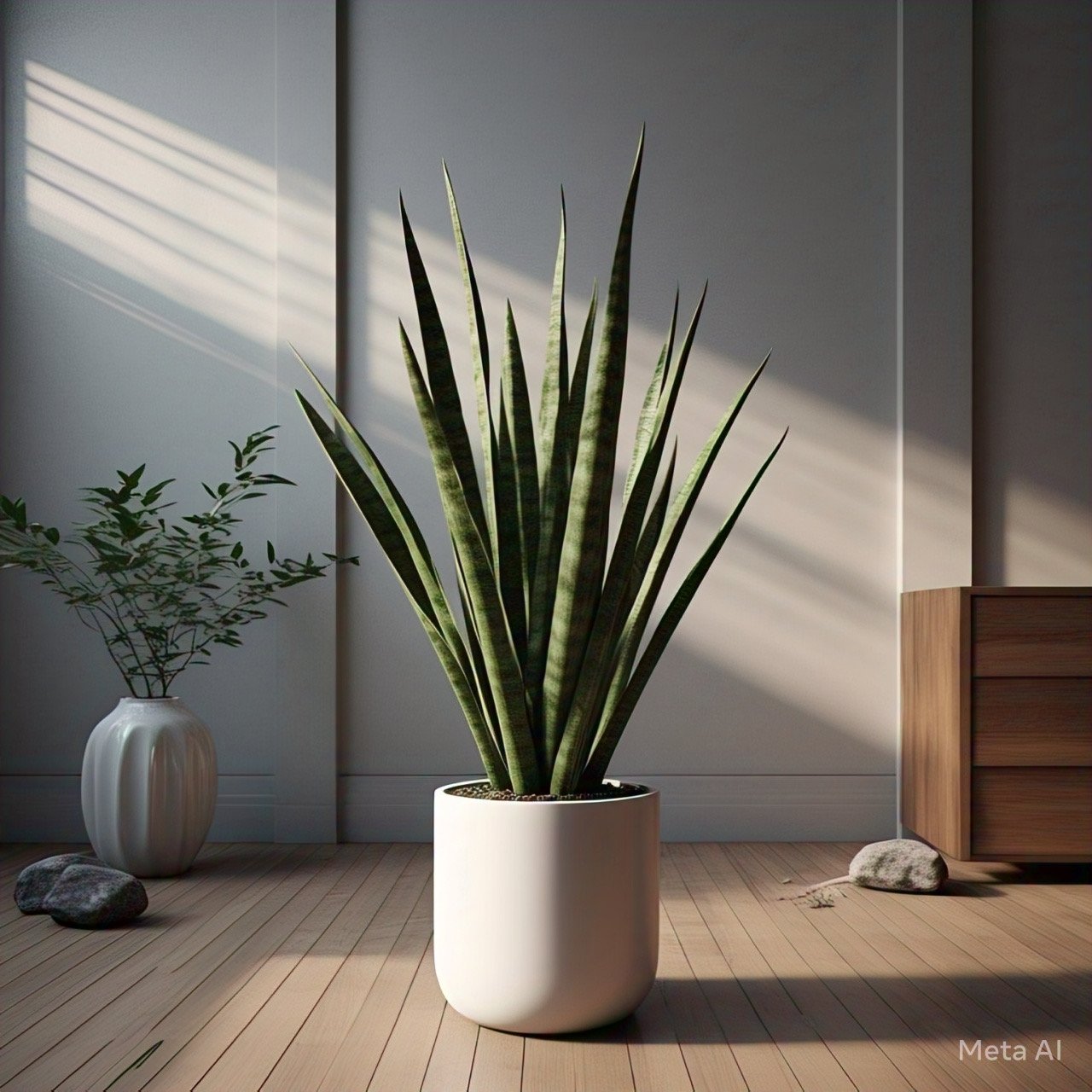
🌿 Snake Plant (Sansevieria) – A Complete Care Guide
✅ 1. Light Requirements
- Ideal: Prefers bright, indirect light but thrives in a variety of conditions.
- Tolerates: Low light, artificial lighting (great for offices).
- Avoid: Intense direct sunlight for prolonged periods (can scorch leaves).
💧 2. Watering Needs
- Frequency: Water every 2-4 weeks (less in winter).
- Indicators: Leaves wrinkling means it’s thirsty; yellow, mushy leaves indicate overwatering.
- Drought-tolerant: Stores water in thick leaves, so it can survive neglect.
🛠 3. Maintenance Level
- Extremely low-maintenance.
- Perfect for beginners or people who travel frequently.
- Wipe leaves occasionally to remove dust.
🌡 4. Temperature & Humidity
- Temperature: Thrives in 15-30°C (59-86°F).
- Humidity: Tolerates low humidity; no misting required.
- Winter Care: Protect from frost; keep indoors if temperatures drop below 10°C (50°F).
🌱 5. Soil Type & Potting
- Soil: Well-draining, sandy or cactus mix.
- Ideal Mix: 2 parts succulent/cactus soil + 1 part perlite/sand.
- Pot Type: Use a terracotta or ceramic pot with drainage holes to prevent root rot.
🎨 6. Aesthetic & Style Factor
- Modern & sculptural look, fits minimalist, industrial, or bohemian décor.
- Looks great in offices, bedrooms, and living rooms.
- Available in many varieties with different leaf patterns and heights.
🌍 7. Air-Purifying Qualities
- NASA-approved air purifier – removes toxins like benzene, formaldehyde, and xylene.
- Releases oxygen at night, making it ideal for bedrooms.
🏡 8. Vastu & Feng Shui Compatibility
- Vastu: Best placed in the southeast or east direction to attract positive energy.
- Feng Shui: Considered a protective plant that absorbs negative energy.
🌸 9. Seasonal Considerations
- Spring & Summer: Active growth period. Water slightly more often.
- Fall & Winter: Growth slows down. Reduce watering significantly.
⚠️ 10. Special Considerations
- Mildly toxic to pets and humans if ingested (causes nausea, vomiting).
- Resilient against pests, but overwatering can lead to root rot.
🐾 11. Pet-Friendly Status
- ❌ NOT pet-friendly – toxic to cats and dogs if consumed. Keep away from curious pets.
🌿 12. Fertilization & Nutrition Requirements
- Feed every 2-3 months in spring and summer.
- Use a balanced liquid fertilizer diluted to half strength.
- Avoid over-fertilization, as Snake Plants grow well in nutrient-poor soil.
📏 13. Growth & Size
- Height: Ranges from 6 inches to 4 feet, depending on variety.
- Growth Rate: Slow to moderate; faster with good light and care.
- Spread: Grows in a vertical clumping pattern.
🛑 14. Common Problems & Troubleshooting
| Problem | Cause | Solution |
|---|---|---|
| Yellow, mushy leaves | Overwatering | Allow soil to dry, reduce watering |
| Wrinkled, curling leaves | Underwatering | Water deeply but infrequently |
| Leaves turning brown | Too much direct sun or poor humidity | Move to indirect light, avoid drafts |
| Pests (mealybugs, spider mites) | Dry indoor air, poor circulation | Wipe with neem oil or insecticidal soap |
🪴 15. Plant Compatibility
- Best Companion Plants:
- ZZ Plant (Zamioculcas zamiifolia) – Similar low-maintenance care needs.
- Pothos (Epipremnum aureum) – Adds a trailing contrast to Snake Plant’s upright form.
- Peace Lily (Spathiphyllum) – Complements aesthetics and purifies air.
- Avoid pairing with high-water-needs plants like ferns or calatheas.