Fiddle Leaf Fig (Ficus lyrata) Overview
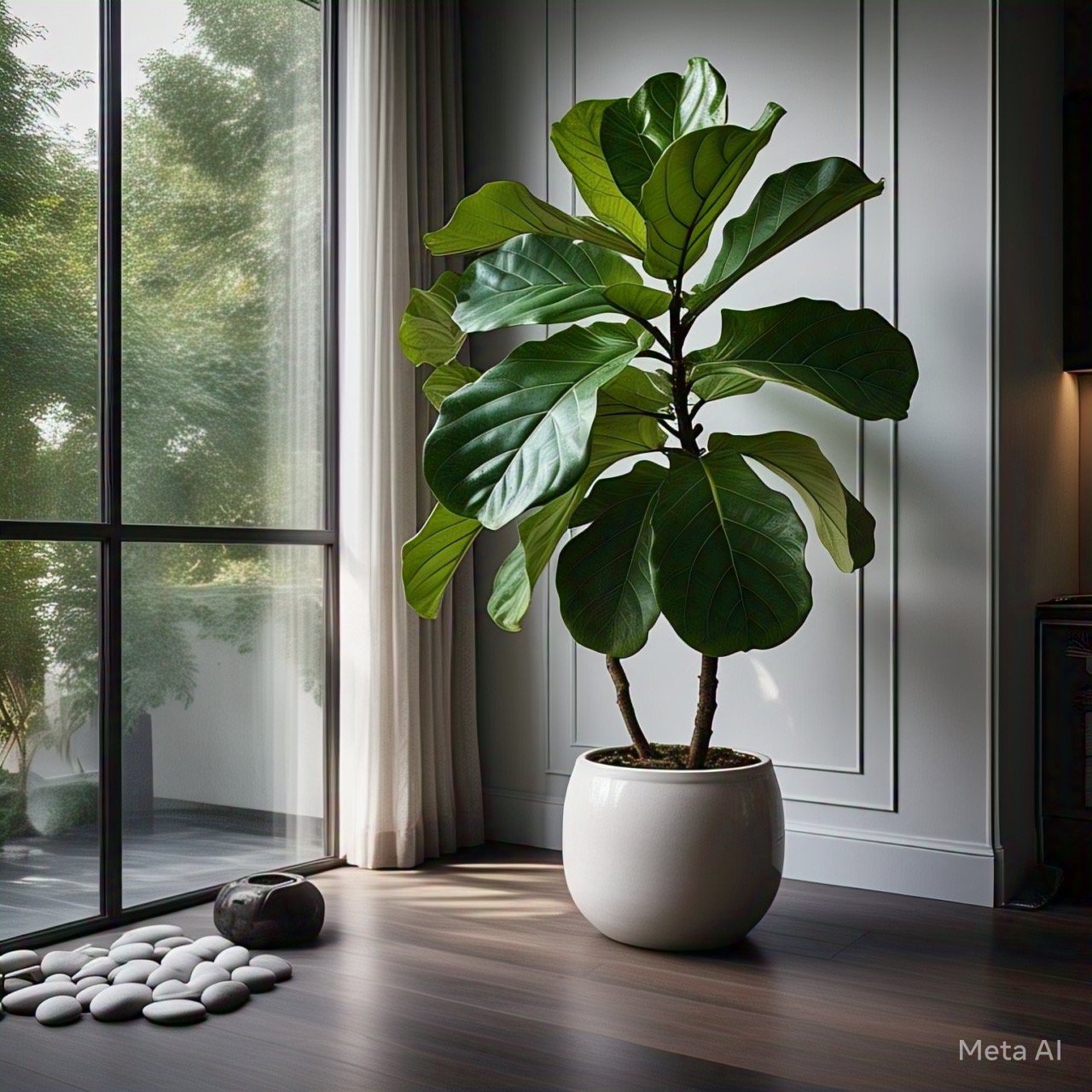
The Fiddle Leaf Fig, scientifically known as Ficus lyrata, is a popular ornamental houseplant known for its large, glossy, violin-shaped leaves. It’s a member of the Moraceae family and native to the tropical rainforests of West Africa. Known for its bold and sculptural appearance, the Fiddle Leaf Fig is a favorite choice for interior decor, often found in living rooms, offices, and other modern spaces.
Light Requirements
- Ideal Light: Fiddle Leaf Figs thrive in bright, indirect light. They need plenty of sunlight to maintain their large, glossy leaves. Direct sunlight can burn the leaves, causing brown spots, so it’s important to avoid placing them in direct sunlight.
- Low Light Tolerance: They are not well-suited to low light conditions and may become leggy, with fewer leaves, if they don’t receive enough light.
- Placement Tip: A spot near a south or west-facing window is ideal for getting plenty of light but avoid placing it directly in the sun for long periods.
Watering Requirements
- Watering Frequency: Fiddle Leaf Figs prefer their soil to dry out a bit between watering. On average, water them once a week, but this can vary depending on the temperature and humidity of your space.
- Soil Moisture: Ensure that the top 1-2 inches of soil dry out before watering again. Overwatering can lead to root rot, so always check the soil moisture before adding more water.
- Watering Tip: It’s best to water the plant thoroughly until water drains from the bottom of the pot. Ensure the plant is not sitting in water afterward.
Maintenance Level
- Moderate Maintenance: The Fiddle Leaf Fig is relatively easy to maintain once you understand its care requirements, but it can be a bit finicky with watering and lighting. Regular leaf cleaning to remove dust and occasional pruning to maintain shape and size is necessary.
- Leaf Care: Clean the leaves with a damp cloth to remove dust and debris. This helps the plant absorb more light and keeps it looking its best.
Temperature and Humidity
- Temperature Range: Fiddle Leaf Figs prefer temperatures between 60°F to 75°F (15°C to 24°C). They are not frost-tolerant, so avoid placing them in areas with drafts or extreme temperature changes.
- Humidity Requirements: Fiddle Leaf Figs love humidity and thrive in a humid environment. They do best in humidity levels of 40% to 60%. If the air in your home is dry, consider placing the plant in a bathroom with natural light or using a humidifier to maintain ideal conditions.
- Humidity Tip: Misting the plant occasionally or placing a tray of water near the plant can help increase humidity levels.
Soil Type and Potting
- Soil Type: Well-draining, lightweight potting mix is essential. A mix designed for indoor plants, or one made of equal parts potting soil, perlite, and pine bark, will provide the drainage Fiddle Leaf Figs require.
- Potting Considerations: Make sure your pot has drainage holes to prevent water from collecting at the bottom, which could cause root rot. Repot every 1-2 years or when the plant outgrows its pot to promote healthy growth.
Aesthetic/Style
- Appearance: Fiddle Leaf Figs are known for their large, bold, glossy, violin-shaped leaves, making them a striking centerpiece in any space. Their upright, tree-like growth habit adds height and drama to a room.
- Decorative Appeal: Their dramatic foliage and modern look make them a popular choice for contemporary and minimalist interior designs. They are especially popular in Scandinavian, boho, and mid-century modern décor.
- Plant Size: Fiddle Leaf Figs can grow quite large indoors, reaching heights of 3-6 feet in most homes. They can eventually become small trees, adding a stylish touch to any room.
Air Purifying
Yes, Fiddle Leaf Figs are excellent at purifying the air. Like other houseplants, they absorb carbon dioxide and release oxygen, improving air quality. Their large leaves help filter toxins, and they contribute to overall better air quality in your home. Though not as potent as certain other plants like peace lilies or snake plants, they still contribute positively to indoor air purification.
Vastu or Feng Shui Compatibility
- Feng Shui: The Fiddle Leaf Fig is considered an excellent choice in Feng Shui for attracting positive energy. It is believed that the plant’s vibrant, large leaves help to bring balance and growth, particularly when placed in the “wealth” or “health” zones of the home. It’s often recommended for living rooms or entryways to promote prosperity and harmony.
- Vastu: In Vastu Shastra, Fiddle Leaf Figs are considered a good plant for the home. It is thought that they promote growth and good fortune when placed in the right direction. Ideally, the plant should be placed in the east or southeast direction to attract wealth and positivity.
Seasonal Considerations
- Spring and Summer: During warmer months, your Fiddle Leaf Fig will be in its active growing phase. You may notice faster growth and may need to water it more frequently. Ensure it receives plenty of bright, indirect sunlight.
- Fall and Winter: During cooler months, the Fiddle Leaf Fig may go into dormancy and grow more slowly. Watering may be required less frequently, and you should be cautious of cold drafts, which can stress the plant.
Special Considerations
- Pruning: Regular pruning helps maintain the shape of your Fiddle Leaf Fig and encourages healthier, fuller growth. Trim any brown or damaged leaves and remove any growth that disrupts the shape you desire.
- Leaf Dropping: Fiddle Leaf Figs are notorious for dropping their lower leaves, especially if they’re stressed due to environmental changes, overwatering, or inadequate light. Keep the plant in stable conditions to minimize leaf drop.
Pet-Friendly Status
- Non-Toxic to Pets: While Fiddle Leaf Figs are not toxic to dogs and cats, it’s still advisable to keep them out of reach of pets who might be tempted to chew on the leaves. The plant’s thick, large leaves can be a choking hazard if ingested in large quantities, though they are not known to cause severe toxicity.
Fertilization and Nutrient Requirements
- Fertilizing: Feed your Fiddle Leaf Fig during its growing season (spring and summer) with a balanced, water-soluble fertilizer diluted to half strength. Once every 4-6 weeks should be sufficient. In fall and winter, when the plant is dormant, you can cut back on fertilizing.
- Nutrient Needs: In addition to regular feeding, ensure that the plant has access to adequate nitrogen, phosphorus, and potassium, as well as micronutrients like calcium, magnesium, and sulfur, to maintain healthy growth.
Growth and Size
- Growth Rate: Fiddle Leaf Figs are moderate to fast growers. In ideal conditions, they can grow several inches a month. They can reach heights of 3-6 feet when grown indoors.
- Size Consideration: As the plant matures, it can become quite large, and may eventually need to be pruned or repotted. Make sure you have enough space for the plant to grow vertically, especially if you’re placing it in a room with limited space.
Common Problems and Troubleshooting
- Brown Spots on Leaves: This is often caused by overwatering, underwatering, or exposure to cold drafts. Check the watering habits and temperature.
- Leaf Drop: If the plant is dropping leaves, it could be a sign of stress due to inadequate light, overwatering, or temperature changes.
- Yellowing Leaves: Yellow leaves can indicate overwatering or a lack of nutrients. Check for root rot, and ensure the plant is getting enough light and the right type of fertilizer.
- Pests: Fiddle Leaf Figs are generally pest-resistant but can occasionally attract spider mites, mealybugs, or aphids. Regularly inspect the leaves for any signs of pests and treat with an insecticidal soap or neem oil if necessary.
Plant Compatibility
- Fiddle Leaf Figs pair well with other indoor plants that have similar light and humidity requirements. For example:
- Peace Lily: Shares similar light and humidity needs and is also a great air purifier.
- Snake Plant: While it thrives in lower light, it can live alongside a Fiddle Leaf Fig, providing an interesting contrast with its upright leaves and low maintenance care.
- Pothos: A great low-maintenance companion, Pothos will add hanging greenery around the base of the Fiddle Leaf Fig, adding aesthetic appeal.
Conclusion
The Fiddle Leaf Fig is a showstopper in any indoor space, offering a stylish and bold statement with its large, lush leaves. With the right care—including proper lighting, watering, and occasional pruning—you can enjoy this magnificent plant for many years. Whether you’re a novice or a seasoned plant parent, the Fiddle Leaf Fig is a beautiful, air-purifying, and Feng Shui-compatible addition to any home, though it does require some attention to thrive.