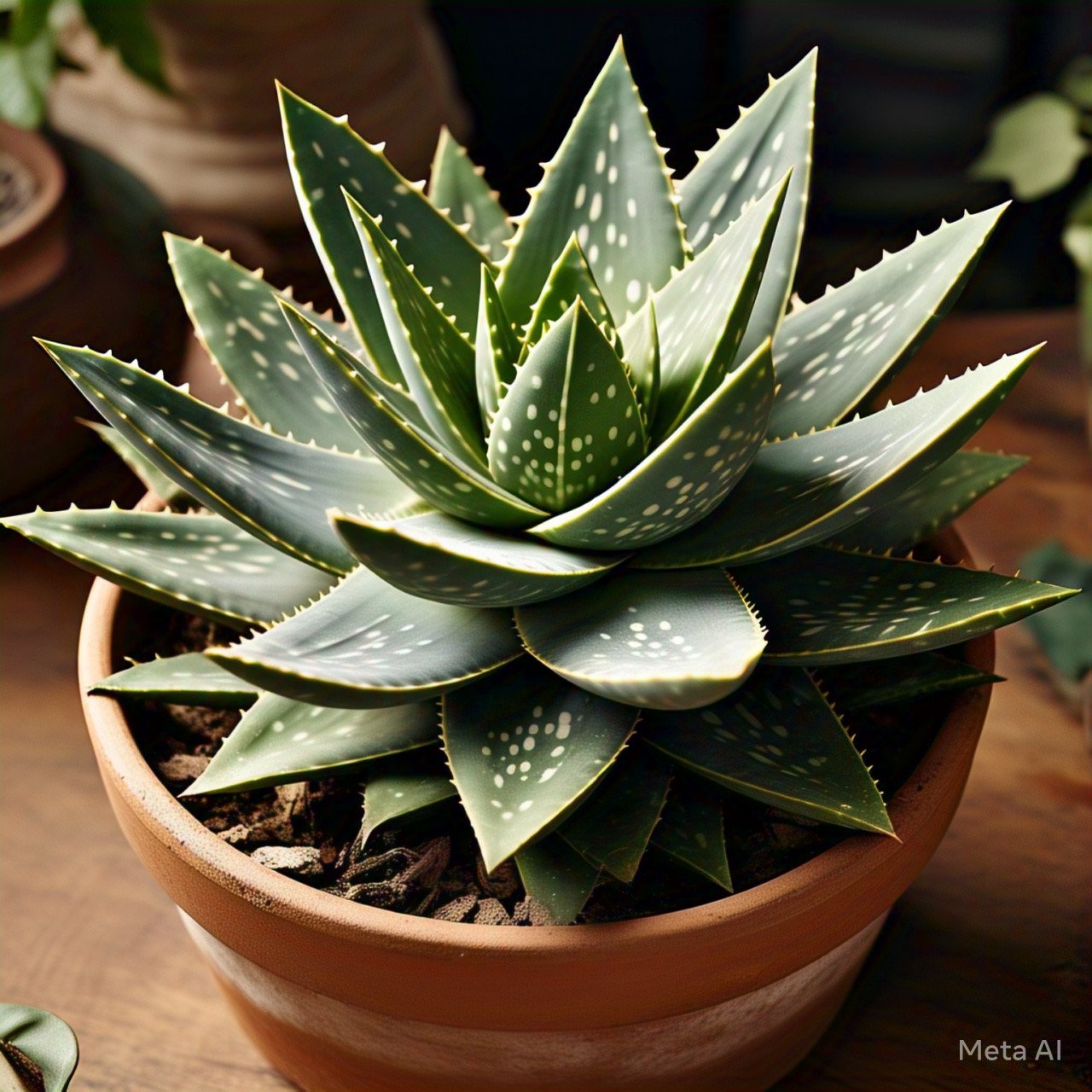
Aloe Vera (Aloe barbadensis miller) – A Complete Care Guide
Here’s a detailed, comprehensive guide for Aloe Vera, including its pet-friendly status, fertilization, growth, troubleshooting, and more!
1. Light Requirements
- Ideal Light: Aloe Vera thrives best in bright, indirect sunlight but can also tolerate direct sunlight for a few hours a day.
- Growth in Low Light: Aloe Vera may survive in lower light conditions but tends to become leggy and weak, with slower growth.
- Best Placement: A sunny windowsill with plenty of indirect sunlight is ideal. It can also be placed outside in the garden if the climate is warm.
2. Watering Needs
- Watering Frequency: Aloe Vera is a low-water plant and is drought-tolerant. It prefers the soil to dry out between waterings.
- Watering Schedule: Water once every 2-3 weeks in the growing season (spring and summer) and reduce watering during the winter months.
- Common Mistakes: Overwatering is the most common issue, as it can lead to root rot. Ensure the pot has good drainage.
- Best Watering Practice: Water only when the top 1-2 inches of soil are dry.
3. Temperature and Humidity
- Temperature Range: Aloe Vera prefers temperatures between 59°F to 77°F (15°C to 25°C).
- Cold Sensitivity: It is sensitive to frost and should not be exposed to temperatures below 50°F (10°C). Keep it indoors during the colder months.
- Humidity Needs: Aloe Vera can tolerate low humidity, making it an excellent choice for homes with average humidity levels.
4. Soil Type
- Ideal Soil: Aloe Vera needs well-draining soil to prevent waterlogging. A cactus mix or sandy, loamy soil works best.
- Soil pH: Aloe Vera prefers slightly acidic to neutral soil (pH 6.0–7.0).
- Drainage: Ensure the pot has good drainage to prevent water from accumulating in the bottom. You can add sand, perlite, or small gravel to increase drainage.
5. Potting and Repotting
- Pot Type: Aloe Vera does well in clay or terracotta pots due to their porous nature, which helps the soil dry faster.
- Repotting: Aloe Vera typically needs repotting every 2-3 years or when the plant outgrows its container. When repotting, ensure you choose a pot that is 1-2 inches larger than the root ball.
- Potting Mix: Use a cactus or succulent mix, or a homemade mix with regular potting soil, sand, and perlite for better drainage.
6. Aesthetic Appeal
- Stylish Factor: Aloe Vera has an elegant, architectural appearance with long, fleshy, spiky, green leaves. It can complement modern and minimalistic decor styles and adds a unique touch to any room.
- Plant Shape: Its rosettes of thick leaves radiate outward, making it an attractive and eye-catching plant.
- Placement: It’s ideal for shelves, windowsills, or tabletops, where its structural form can stand out.
7. Maintenance Level
- Low Maintenance: Aloe Vera is a low-maintenance plant. It only requires occasional watering and minimal care, making it perfect for beginners and busy individuals.
- Common Issues: As long as the plant is not overwatered, Aloe Vera is quite easy to maintain.
- Pruning: Aloe Vera does not require regular pruning, but you can trim dead or damaged leaves occasionally to keep it looking tidy.
8. Air Purifying Qualities
- Air Purification: Aloe Vera is known for its air-purifying qualities. It can help remove harmful chemicals from the air, such as formaldehyde and benzene. Additionally, it releases oxygen at night, improving indoor air quality.
- Health Benefits: Aloe Vera is not just beneficial for air quality; the gel inside its leaves has healing properties and can be used for skin conditions, burns, and cuts.
9. Vastu or Feng Shui Compatibility
- Vastu: Aloe Vera is believed to be good for health and prosperity and can be placed in the east or southeast direction according to Vastu Shastra. It is said to promote positive energy and health in the home.
- Feng Shui: In Feng Shui, Aloe Vera is considered a good luck plant and can be placed in the wealth area (southeast corner) or the health area (east corner) of your home to encourage healing and prosperity.
10. Seasonal Considerations
- Spring and Summer: Aloe Vera grows most actively during the warm months (spring and summer). It requires slightly more frequent watering and may benefit from a quarterly fertilization during this time.
- Winter: Aloe Vera’s growth slows down in the winter, and the plant needs much less water. It’s best to keep it in a place that remains cool and dry but away from drafts.
- Temperature: During cold weather, Aloe Vera should be brought indoors if it was previously outside.
11. Special Considerations
- Toxicity: Aloe Vera is generally non-toxic to humans and pets. However, the latex inside the leaves can be irritating to sensitive skin or cause stomach discomfort if ingested in large quantities, so it is important to keep it out of reach of children and pets.
- Practical Uses: Aloe Vera is often used for topical medicinal purposes, such as treating burns, cuts, and skin irritations due to its natural cooling and healing properties.
- Flowering: Aloe Vera may occasionally flower, but the flowers are typically not very showy. They are yellow or orange tubular flowers that bloom on a tall stem. It usually flowers in late winter to early spring, but it only blooms in optimal conditions.
12. Pet-Friendly Status
- Non-Toxic to Pets: Aloe Vera is toxic to pets (dogs, cats, and horses). It contains saponins and anthraquinones, which can cause vomiting, diarrhea, and lethargy if ingested by pets.
- Precautions: Always place Aloe Vera out of the reach of curious pets. If your pet ingests part of the plant, contact a veterinarian immediately.
13. Fertilization and Nutrition Requirements
- Fertilizer Needs: Aloe Vera does not need frequent fertilizing. It only requires light feeding during the growing season (spring and summer). Use a balanced, diluted liquid fertilizer (preferably low in nitrogen) once a month.
- Fertilizer Type: Choose a succulent-specific fertilizer or a general-purpose liquid fertilizer diluted to half strength.
- Winter Care: Do not fertilize in winter when the plant is dormant.
14. Growth and Size
- Growth Rate: Aloe Vera grows slowly, typically adding 1-3 inches of growth per year.
- Mature Size: Aloe Vera can reach about 1-2 feet in height and 2 feet in diameter when fully grown.
- Offsets: Aloe Vera produces pups or offsets (small plantlets at the base) that can be separated and repotted to propagate new plants.
15. Common Problems and Troubleshooting
- Yellowing Leaves: If the leaves turn yellow, it could be a sign of overwatering or poor drainage. Check the pot’s drainage and reduce watering.
- Leggy Growth: Aloe Vera becomes leggy (stretched out) when it is not receiving enough light. Ensure it is placed in a bright, indirect light spot.
- Brown Tips: Brown tips on the leaves could indicate low humidity or excessive heat. Make sure the plant is not placed in a drafty area or near heat sources.
- Root Rot: Caused by overwatering, root rot can be avoided by ensuring good drainage and allowing the soil to dry out between waterings. If root rot occurs, remove the affected roots and repot the plant in fresh, dry soil.
16. Plant Compatibility
- Companion Plants: Aloe Vera does well in a grouping of succulents and cacti due to similar water and sunlight needs. Other compatible plants include:
- Jade Plant (Crassula ovata)
- Snake Plant (Sansevieria)
- Spider Plant (Chlorophytum comosum)
- Echeveria (succulent)
- Non-Companion Plants: Avoid pairing Aloe Vera with plants that have high water needs or those that require high humidity, such as ferns or tropical plants.
Summary Table for Aloe Vera Care
| Aspect | Details |
|---|---|
| Light | Bright, indirect sunlight; can tolerate direct sunlight |
| Watering | Water when soil is dry, every 2-3 weeks |
| Temperature | 59°F to 77°F (15°C to 25°C); avoid frost |
| Humidity | Tolerates low humidity |
| Soil | Well-draining, cactus or succulent mix |
| Potting | Terracotta or clay pot with good drainage |
| Fertilization | Light feeding with diluted liquid fertilizer in spring/summer |
| Growth Rate | Slow; 1-3 inches per year |
| Size | 1-2 feet in height, 2 feet in diameter |
| Pet-Friendly | Not pet-friendly (toxic to pets) |
| Air Purification | Yes, purifies air by removing toxins |
| Vastu/Feng Shui | Good for health and prosperity, east/southeast placement |
| Special Considerations | Non-toxic to humans, but irritating if ingested; care with pets |