1. Light Requirements
- Ideal: Bright, indirect sunlight; 6 hours/day minimum.
- Outdoor: Full sun is preferred for Sedum; Echeveria loves morning sun and partial shade in the afternoon.
- Indoor: Near a sunny window (south/east-facing). Grow lights can supplement.
2. Watering Needs
- Rule: “Soak and dry” method – water thoroughly, then allow soil to dry completely.
- Frequency: Every 1–2 weeks in summer; monthly or less in winter.
- Warning: Overwatering is the top killer; avoid water on leaves to prevent rot.
3. Maintenance Level
- Low-maintenance: Ideal for beginners and busy individuals.
- Occasional pruning of dead leaves or leggy growth.
4. Temperature & Humidity
- Temperature: 60–80°F (15–27°C) ideal; tolerate down to 40°F (4°C) but not frost-hardy.
- Humidity: Prefer low humidity; high humidity can cause rot and pests.
5. Soil Type & Potting
- Soil: Well-draining cactus or succulent mix; DIY mix: 2 parts potting soil, 1 part sand, 1 part perlite/pumice.
- Potting: Use pots with drainage holes; terracotta/clay pots help wick moisture.
6. Aesthetic Appeal
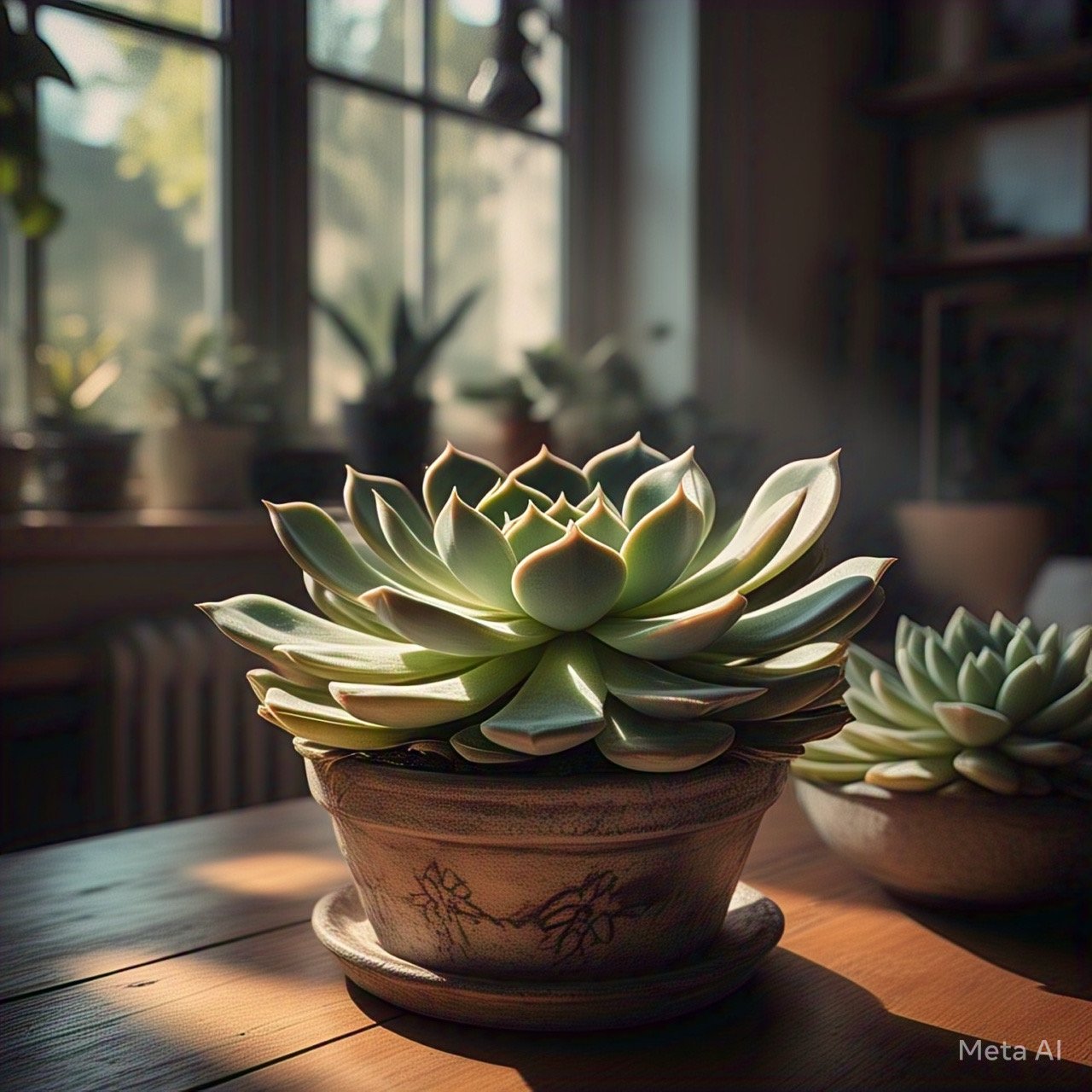
- Stylish: Symmetrical rosettes (Echeveria), trailing forms (Sedum); available in a range of colors—pastels, greens, purples.
- Decor Use: Modern, minimalist, boho-chic interiors; great for desk, windowsill, terrariums.
7. Air Purification
- Minor benefit: Not as effective as larger foliage plants, but still contribute to indoor air quality.
8. Vastu / Feng Shui Compatibility
- Vastu: Considered positive; brings harmony and calm energy, especially in the east or southeast direction.
- Feng Shui: Symbol of resilience and growth; best placed near windows or in wealth corners.
9. Seasonal Considerations
- Dormant Period: Winter – reduce watering; avoid fertilization.
- Active Growth: Spring & summer – best time for propagation and feeding.
10. Special Considerations
- Propagation: Easily propagated via leaf cuttings, offsets, or stem cuttings.
- Pest Resistance: Generally pest-resistant; watch for mealybugs and aphids.
11. Pet Friendliness
- Echeveria: Generally non-toxic to pets.
- Sedum: Some species may be mildly toxic; check individual variety.
12. Fertilization & Nutrition
- Fertilizer: Low-strength, balanced fertilizer (e.g., 10-10-10) or cactus fertilizer.
- Frequency: Once a month in growing season; skip in dormant period.
13. Growth & Size
- Echeveria: Compact, 3–12 inches; forms rosettes.
- Sedum: Ranges from small ground covers to 2-feet trailing forms.
- Growth Rate: Moderate; varies by variety and care.
14. Common Problems & Troubleshooting
| Problem | Cause | Solution |
|---|---|---|
| Leaf Drop | Overwatering, stress | Let soil dry; adjust watering |
| Yellow Mushy Leaves | Root rot | Remove rot; repot in dry soil |
| Stretching (Etiolation) | Insufficient light | Move to brighter spot |
| Mealybugs/Aphids | Pests | Use neem oil or insecticidal soap |
15. Plant Compatibility
- Pairs well with: Cacti, Aloe Vera, Jade Plant, Haworthia, Snake Plant.
- Avoid high-water plants (e.g., ferns) in same pot.