Monstera Deliciosa: A Complete Guide
1. Light Requirements:
- Monstera Deliciosa thrives in indirect bright light. It can tolerate lower light conditions but will grow slower and may have fewer holes or splits in its leaves.
- Direct sunlight should be avoided as it can scorch the leaves, causing them to brown or wilt.
2. Watering:
- Water the plant moderately and allow the top 1-2 inches of soil to dry out before watering again.
- Avoid over-watering as it can lead to root rot. Ensure the pot has good drainage.
- In winter, reduce watering as the plant’s growth slows down, and it needs less moisture.
3. Maintenance Level:
- Monstera Deliciosa is considered a low-maintenance plant. It requires occasional pruning to manage its size and shape.
- Wipe the leaves occasionally to keep them dust-free, ensuring optimal photosynthesis.
4. Temperature and Humidity:
- The ideal temperature range is 65°F to 85°F (18°C to 29°C).
- It prefers higher humidity (60-80%), but it can tolerate regular indoor humidity levels. To increase humidity, you can mist the plant, place it on a humidity tray, or use a humidifier.
5. Soil Type and Potting:
- Monstera Deliciosa prefers a well-draining potting mix. A peat-based mix with added perlite or orchid bark is ideal for ensuring proper drainage.
- A pot with drainage holes is essential to prevent water from stagnating and causing root rot.
6. Aesthetic or Stylish:
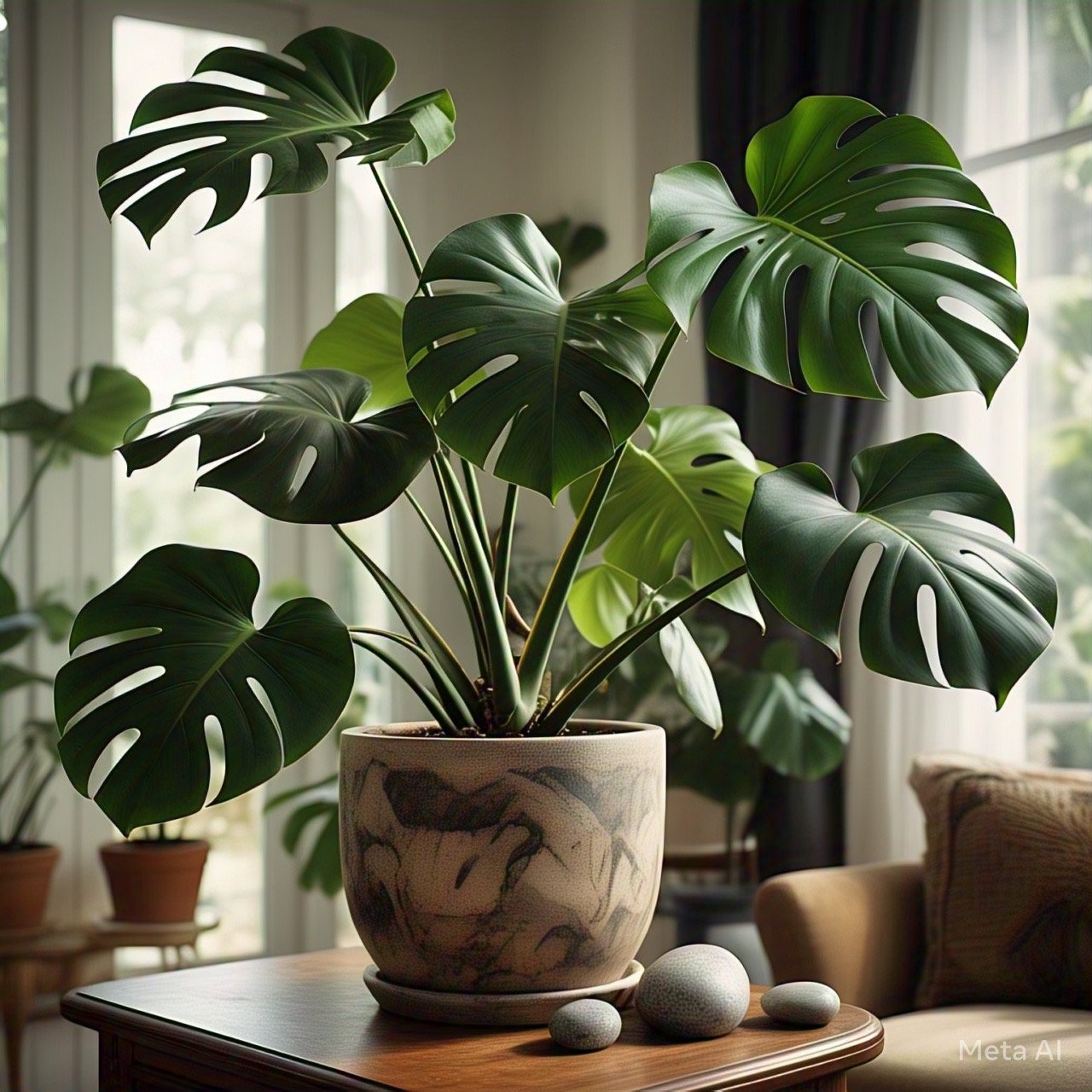
- This plant is highly regarded for its aesthetic appeal. With large, glossy, deeply lobed leaves, it adds a tropical, lush vibe to any interior.
- It works well in a variety of decor styles, including modern, boho, and minimalist settings.
- Its unique leaf pattern, with holes (fenestrations), makes it stand out as an iconic statement piece in homes or offices.
7. Air Purifying:
- Monstera Deliciosa is air-purifying, removing common toxins like formaldehyde, benzene, and xylene from the air.
- It contributes to improving air quality in your living space.
8. Vastu or Feng Shui Compatibility:
- Vastu: Monstera Deliciosa is often considered auspicious in Vastu, especially when placed in the south-east corner of the home, as it is believed to promote prosperity, positivity, and growth.
- Feng Shui: In Feng Shui, the plant is seen as bringing good fortune and positive energy into a space. It should ideally be placed in areas like the east or southeast to attract abundance and vitality.
- The plant’s lush, expansive growth symbolizes vitality and the flow of life energy.
9. Seasonal Considerations:
- Spring and Summer: During the warmer months, Monstera Deliciosa grows more actively. This is the best time to repot or prune the plant if necessary.
- Fall and Winter: Growth slows down, and the plant will require less water and fertilizer. Ensure it’s not exposed to drafts or cold temperatures during this period.
10. Special Considerations:
- If growing indoors, provide a support structure (like a moss pole or trellis) to help the plant grow upright and give it a natural, climbing growth habit.
- Regularly inspect for pests such as spider mites or mealybugs, which can sometimes infest the leaves.
- Avoid over-fertilizing, as this can lead to leggy growth or burned roots.
11. Pet-Friendly:
- Unfortunately, Monstera Deliciosa is toxic to pets (cats and dogs). The plant contains calcium oxalate crystals, which can cause oral irritation, difficulty swallowing, and digestive upset if ingested.
- Keep the plant out of reach of pets or consider pet-friendly alternatives if you have animals at home.
12. Fertilization and Nutrition Requirement:
- During the growing season (spring and summer), feed the plant monthly with a balanced liquid fertilizer diluted to half strength.
- In fall and winter, the plant is dormant, so fertilization can be reduced or stopped completely.
- Over-fertilization can lead to nutrient burn, so it’s important to follow the recommended dosage.
13. Growth and Size:
- Monstera Deliciosa can grow quite large, reaching up to 10-15 feet (3-5 meters) in height in its natural environment or with proper care.
- Indoors, it typically grows to a smaller size, often around 6-8 feet (1.8-2.4 meters), but it can be trained to grow on a vertical support structure.
- It has long, aerial roots that help the plant climb and spread.
14. Common Problems and Troubleshooting:
- Yellowing leaves: This could be due to over-watering, insufficient light, or nutrient deficiencies.
- Brown tips: Often caused by dry air, underwatering, or exposure to direct sunlight.
- Leaf holes not forming: This can happen if the plant is not getting enough light or is in a very small pot.
- Pests: Watch out for common pests like aphids, mealybugs, or spider mites, especially in dry indoor conditions. Treat with insecticidal soap or neem oil.
15. Plant Compatibility:
- Monstera Deliciosa pairs well with other tropical plants, like philodendrons, pothos, and peace lilies, as they all enjoy similar environmental conditions.
- It’s a perfect companion for other air-purifying plants in a living room, kitchen, or bedroom.
- Avoid planting it next to plants that prefer low humidity or dry conditions, as it could hinder its growth.