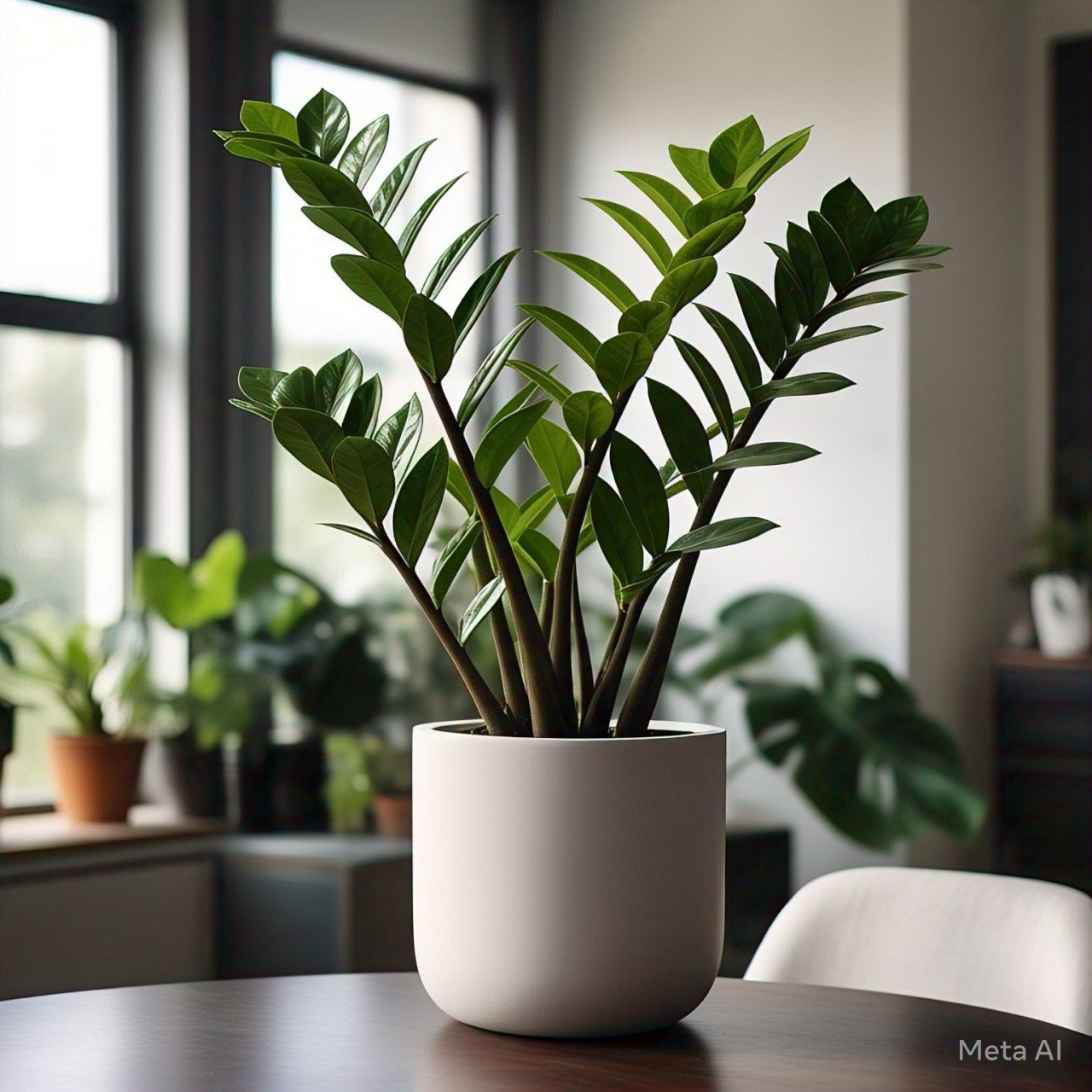
ZZ Plant (Zamioculcas zamiifolia) Overview
The ZZ Plant, also known as Zanzibar Gem or Emerald Palm, is a hardy, easy-to-care-for houseplant that has become incredibly popular in recent years due to its resilience and stylish appearance. Its glossy, dark green leaves and ability to thrive in low-light conditions make it a perfect addition to any home or office.
Light Requirements
- Light Level: The ZZ plant is known for its ability to thrive in low light, but it grows best in indirect bright light. While it can tolerate low light, prolonged exposure to direct sunlight can cause the leaves to scorch and burn.
- Optimal Conditions: Placing the plant near a window with filtered light or in a room with indirect light is ideal for it.
- Tolerance to Low Light: The ZZ plant is perfect for spaces like offices, bathrooms, or corners of your home that receive minimal sunlight.
Watering and Moisture
- Watering Needs: The ZZ plant is drought-tolerant and can go for long periods without water. Overwatering is a common issue, so ensure that the soil is dry before watering again. Watering once every 2-3 weeks should suffice, but frequency may vary depending on the season and humidity levels.
- Watering Tips:
- Let the soil dry out between waterings.
- During the winter months, reduce the watering schedule, as the plant goes into a semi-dormant state.
- Always ensure the pot has good drainage to avoid waterlogging and root rot.
Maintenance Level
- Maintenance: The ZZ plant is low-maintenance, making it an ideal choice for beginners or busy plant owners. It doesn’t require frequent pruning, although you may want to remove any yellow or damaged leaves as needed.
- Cleaning: Occasionally wipe the leaves with a damp cloth to remove dust and keep them shiny.
Temperature and Humidity
- Temperature: ZZ plants thrive in a temperature range of 60°F to 75°F (15°C to 24°C). They can tolerate a slight dip in temperature, but anything below 45°F (7°C) can damage the plant.
- Humidity: ZZ plants are not particularly sensitive to humidity levels. They can thrive in both low and high humidity conditions. In drier environments, consider placing the plant on a humidity tray or lightly misting the leaves occasionally.
Soil Type and Potting
- Soil: ZZ plants prefer a well-draining, slightly sandy soil mix. A cactus or succulent mix is often ideal, as it ensures good drainage.
- Potting:
- Choose a pot with drainage holes to prevent water from accumulating at the bottom.
- Use a standard houseplant potting mix if a cactus mix isn’t available, but be sure it’s well-draining.
- ZZ plants don’t require frequent repotting, and their slow growth means they can stay in the same pot for a couple of years.
Aesthetic and Stylish Qualities
- Aesthetic Appeal: The ZZ plant has an elegant, modern look with its shiny, dark green, waxy leaves and upright growth. It is often used in contemporary interiors, offices, and living rooms.
- Stylish Features: It has a unique, almost sculptural form that can add a sleek, sophisticated touch to any space. Its glossy leaves complement various types of interior décor, from minimalist to boho-chic.
Air Purifying Qualities
- Air-Purifying: ZZ plants are known for their ability to improve indoor air quality. They help filter out common toxins like benzene, xylene, and toluene, making them an excellent addition to indoor spaces.
- NASA’s Clean Air Study: ZZ plants were included in NASA’s Clean Air Study due to their ability to remove pollutants from the air, making them perfect for bedrooms, offices, and other indoor spaces.
Vastu and Feng Shui Compatibility
- Vastu Compatibility: According to Vastu Shastra, the ZZ plant is believed to bring positive energy and prosperity when placed in the south-east corner of the home or office. It is often associated with wealth and abundance.
- Feng Shui Compatibility: In Feng Shui, the ZZ plant is considered a symbol of resilience and good fortune. It is believed to bring balance and harmony to a space, and placing it near the entrance is thought to attract wealth and good energy.
Seasonal Considerations
- Spring and Summer: During the warmer months, ZZ plants may grow more actively. Increase watering slightly, but ensure that the soil has dried out between waterings.
- Fall and Winter: In cooler months, ZZ plants go into a semi-dormant phase and require less watering. The growth rate slows down, and you can reduce the watering schedule.
Special Considerations
- Toxicity: ZZ plants are toxic to pets (cats and dogs) if ingested. The plant contains calcium oxalate crystals, which can cause irritation, drooling, and digestive issues if eaten. Keep it out of reach of pets and children.
- Resilience: ZZ plants are quite resilient and can tolerate neglect, making them perfect for beginners. However, they should not be overwatered, and their growth may be stunted if conditions aren’t ideal.
Pet-Friendly Consideration
- Toxicity: ZZ plants are not pet-friendly. They are toxic to both cats and dogs if ingested. The plant’s sap can cause irritation to the digestive tract and may lead to symptoms like drooling, vomiting, and loss of appetite in pets. Ensure that the plant is placed in an area inaccessible to pets.
Fertilization and Nutrition Requirements
- Fertilization: ZZ plants do not need a lot of fertilization, but they benefit from occasional feeding during the growing season (spring and summer).
- Use a balanced liquid houseplant fertilizer once a month.
- Avoid fertilizing during the fall and winter months when the plant is dormant.
- Nutrient Needs: ZZ plants are not particularly demanding when it comes to nutrients. They are low-maintenance in terms of feeding, and over-fertilizing can lead to salt buildup in the soil, which can harm the plant.
Growth and Size
- Growth Rate: ZZ plants are slow-growing. It can take several years for them to reach full size.
- Height: A mature ZZ plant can grow between 2 to 3 feet (60 to 90 cm) tall. However, they are typically quite compact and can easily fit into smaller spaces.
- Spread: The plant has an upright, bushy form, but it will spread out slightly as it grows. The long, waxy leaves grow in a zigzag pattern along the stem.
Common Problems and Troubleshooting
- Yellowing Leaves:
- Cause: Overwatering or poor drainage.
- Solution: Ensure the soil is well-draining and only water when the soil is dry. Remove any yellow leaves to prevent rot.
- Brown Tips or Leaf Tips Curling:
- Cause: Underwatering or exposure to direct sunlight.
- Solution: Water the plant when the top 1-2 inches of soil are dry. Move the plant to a spot with indirect light.
- Root Rot:
- Cause: Overwatering or poor drainage.
- Solution: Repot the plant into fresh, well-draining soil and a new pot with drainage holes. Trim any affected roots.
- Pests: ZZ plants are relatively pest-resistant, but occasionally, you may find mealybugs, scale insects, or spider mites.
- Solution: Use an insecticidal soap or a mixture of water and dish soap to treat the plant.
Plant Compatibility
- Companion Plants: ZZ plants pair well with other low-maintenance plants such as snake plants, peace lilies, and pothos. These plants thrive under similar conditions and can be used together in a display.
- Avoid placing ZZ plants next to plants that require high moisture or direct sunlight, as the ZZ plant has very different water and light requirements.
Conclusion
The ZZ plant (Zamioculcas zamiifolia) is a stunning and low-maintenance addition to any home or office. Its ability to thrive in low light, tolerate neglect, and purify the air makes it a highly versatile and beneficial plant. However, it is important to be cautious with pets, as it is toxic if ingested. With the right care, the ZZ plant will grow slowly over the years, providing lush green foliage and enhancing your indoor space.