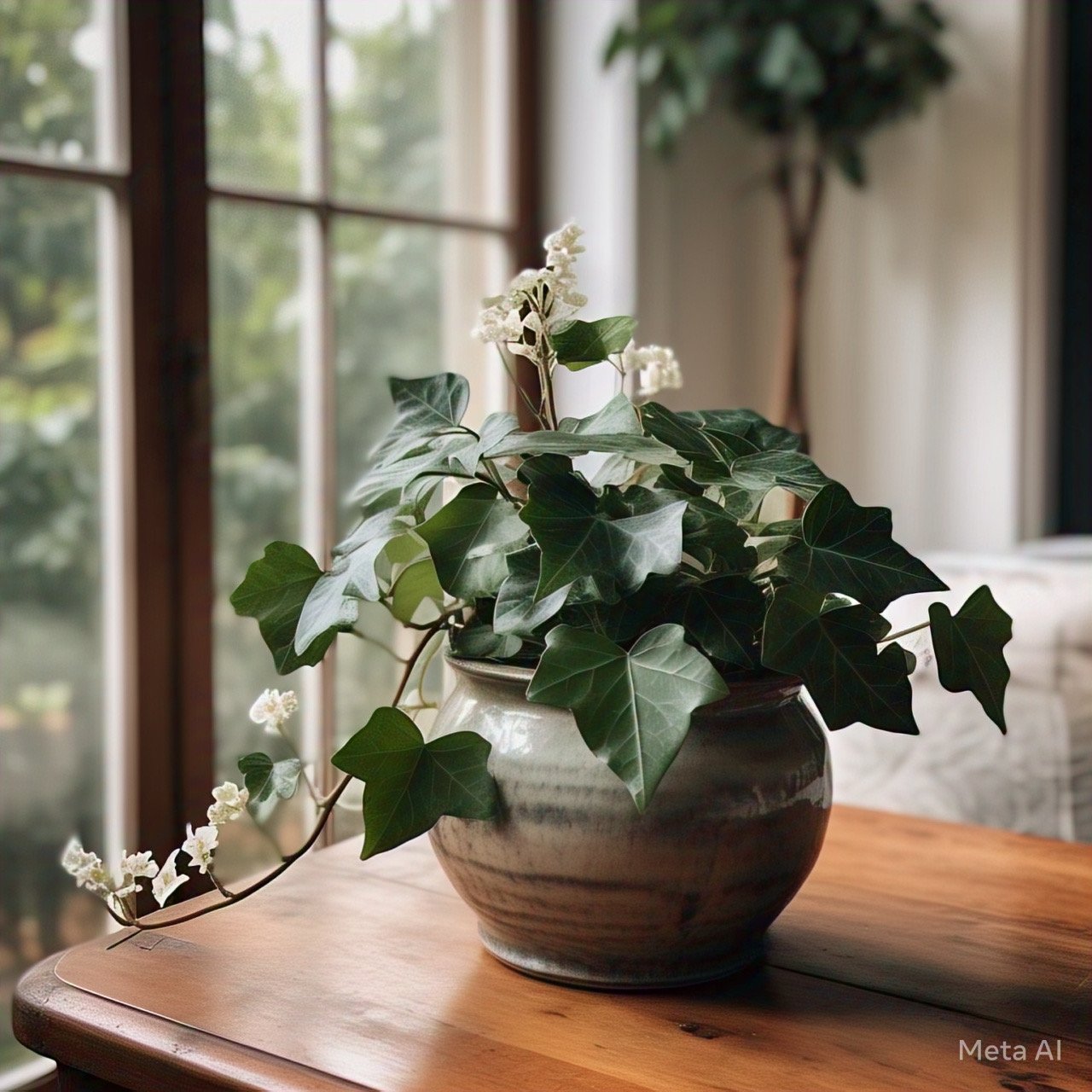
🌿 English Ivy (Hedera helix) – A Complete Care Guide
✅ 1. Light Requirements
- Ideal: Prefers bright, indirect light for healthy growth.
- Tolerates: Low light but may grow slowly and become leggy.
- Avoid: Direct sunlight for prolonged hours (can scorch leaves).
💧 2. Watering Needs
- Frequency: Water once a week in growing seasons; reduce in winter.
- Indicators: Drooping or crispy leaves mean it’s too dry; yellow leaves mean overwatering.
- Watering Tip: Let the top inch of soil dry before watering again.
🛠 3. Maintenance Level
- Moderate care level – needs regular pruning and occasional repotting.
- Pruning: Trim long vines to control size and encourage bushy growth.
- Dusting: Wipe leaves to keep them free from dust and pests.
🌡 4. Temperature & Humidity
- Temperature: Thrives in 15-25°C (59-77°F).
- Humidity: Prefers moderate to high humidity (40-50%).
- Winter Care: Protect from cold drafts and dry indoor heating.
🌱 5. Soil Type & Potting
- Soil: Well-draining, loamy, or peat-based soil.
- Ideal Mix: 2 parts potting soil + 1 part perlite/sand for drainage.
- Pot Type: Use a pot with drainage holes to prevent root rot.
🎨 6. Aesthetic & Style Factor
- Classic and elegant, great for both hanging baskets and trellises.
- Perfect for vertical gardens, bookshelves, or cascading over pots.
- Adds a touch of greenery to both modern and rustic interiors.
🌍 7. Air-Purifying Qualities
- Removes toxins like benzene, formaldehyde, and mold spores from the air.
- Can help reduce airborne allergens.
🏡 8. Vastu & Feng Shui Compatibility
- Vastu: Best placed in the north or east direction to attract positive energy.
- Feng Shui: Symbolizes growth, protection, and connection. Avoid placing it indoors in the southwest corner as it may block positive energy flow.
🌸 9. Seasonal Considerations
- Spring & Summer: Active growing season—needs more water and fertilizer.
- Fall & Winter: Growth slows down—reduce watering and stop fertilizing.
⚠️ 10. Special Considerations
- Highly invasive outdoors – can take over gardens if not controlled.
- Avoid placing near walls or surfaces if climbing is not desired.
🐾 11. Pet-Friendly Status
- ❌ NOT pet-friendly – toxic to cats and dogs if ingested. Can cause vomiting, diarrhea, and irritation.
🌿 12. Fertilization & Nutrition Requirements
- Feed every 4-6 weeks in spring and summer.
- Use a diluted balanced liquid fertilizer (10-10-10).
- Avoid excessive fertilization, which can cause leggy growth.
📏 13. Growth & Size
- Growth Rate: Fast-growing, especially in optimal conditions.
- Vine Length: Can grow up to 50 feet outdoors, but remains manageable indoors.
- Shape: Can be trained to trail down, climb, or grow as ground cover.
🛑 14. Common Problems & Troubleshooting
| Problem | Cause | Solution |
|---|---|---|
| Yellow leaves | Overwatering | Allow soil to dry, adjust watering |
| Brown leaf tips | Dry air, underwatering | Increase humidity, mist occasionally |
| Leggy growth | Low light | Move to brighter location, prune regularly |
| Pests (spider mites, aphids) | Dry conditions | Wipe leaves, use neem oil or insecticidal soap |
🪴 15. Plant Compatibility
- Best Companion Plants:
- Pothos (Epipremnum aureum) – Similar care requirements and trailing habit.
- Peace Lily (Spathiphyllum) – Complements Ivy’s texture and purifies air.
- Snake Plant (Sansevieria) – Adds structure and contrast.
- Avoid pairing with high-water-requirement plants like ferns or calatheas.