🌿 Peace Lily (Spathiphyllum) – A Complete Care Guide
✅ 1. Light Requirements
- Ideal: Bright, indirect light. Prefers dappled sunlight.
- Tolerates: Low-light conditions but may bloom less frequently.
- Avoid: Direct sunlight, as it can scorch leaves.
💧 2. Watering Needs
- Frequency: Water once a week or when the top inch of soil feels dry.
- Indicators: Drooping leaves indicate thirst; yellow leaves suggest overwatering.
- Water Quality: Prefers filtered or distilled water; sensitive to chlorine in tap water.
🛠 3. Maintenance Level
- Easy to moderate care – great for beginners.
- Requires occasional cleaning of leaves with a damp cloth to remove dust.
- Pruning: Remove yellow or brown leaves to encourage new growth.
🌡 4. Temperature & Humidity
- Temperature: Thrives in 18-30°C (65-86°F). Avoid cold drafts.
- Humidity: Prefers high humidity (50-60%). Benefits from occasional misting.
- Winter Care: Protect from dry air; avoid placing near radiators.
🌱 5. Soil Type & Potting
- Soil: Well-draining, nutrient-rich soil; prefers a peat-based potting mix.
- Ideal Mix: Equal parts peat, perlite, and compost.
- Pot Type: Use a pot with drainage holes to prevent root rot.
🎨 6. Aesthetic & Style Factor
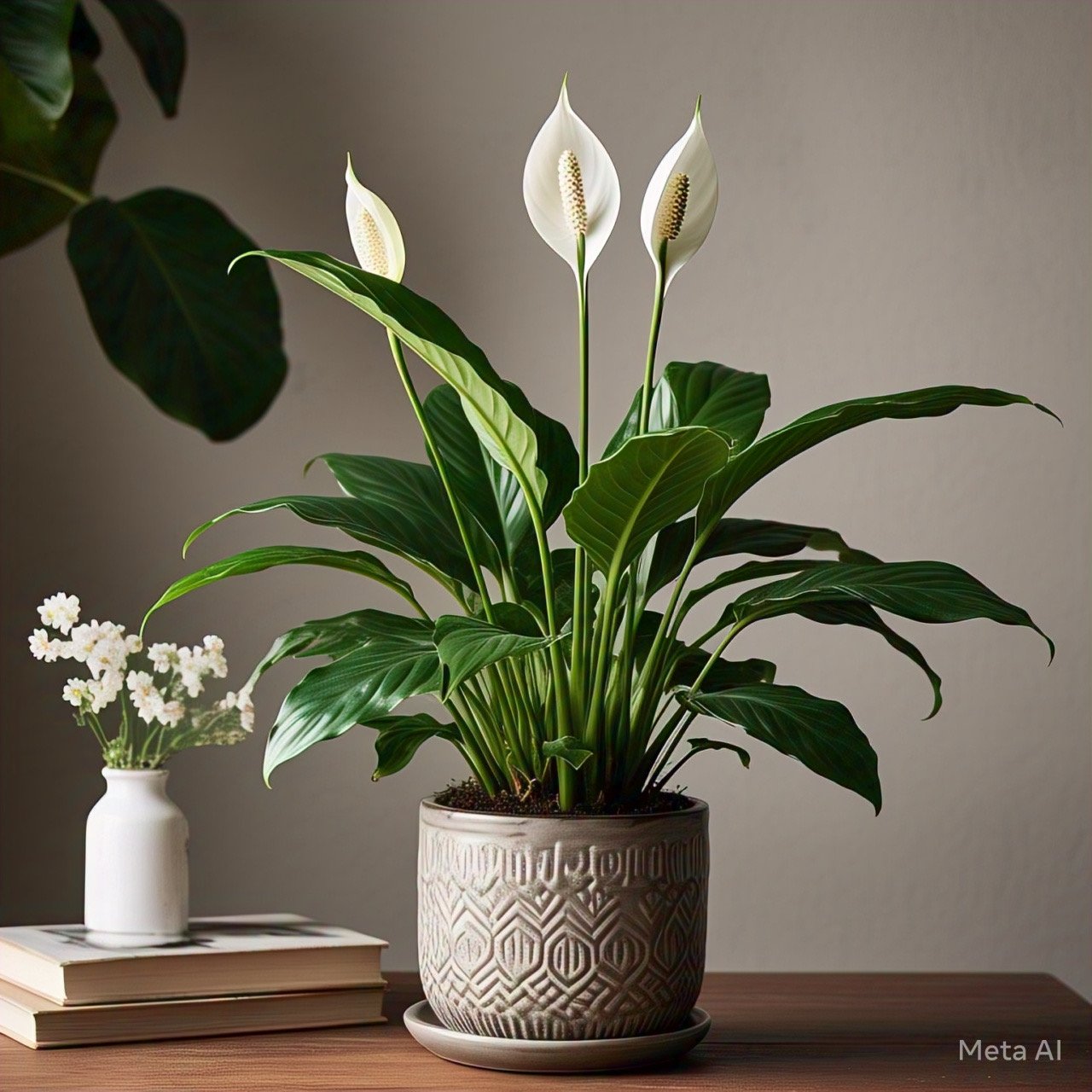
- Elegant & timeless plant with glossy green leaves and white blooms.
- Looks great in minimalist, modern, or bohemian interiors.
- Perfect for offices, bedrooms, and living rooms.
🌍 7. Air-Purifying Qualities
- NASA-approved air purifier – removes toxins like benzene, formaldehyde, and carbon monoxide.
- Improves indoor air quality and enhances oxygen levels.
🏡 8. Vastu & Feng Shui Compatibility
- Vastu: Ideal for the northeast or east direction to bring peace and harmony.
- Feng Shui: Symbolizes purity, healing, and good energy. Best placed in bedrooms or meditation areas.
🌸 9. Seasonal Considerations
- Grows actively in spring and summer.
- Blooms in warm conditions (though some varieties bloom year-round).
- May need reduced watering in winter.
⚠️ 10. Special Considerations
- Mildly toxic to humans and pets if ingested (contains calcium oxalate crystals).
- Keep out of reach of pets and small children.
- Sensitive to fluoride in water—use distilled or rainwater.
🐾 11. Pet-Friendly Status
- ❌ NOT pet-friendly – toxic to cats and dogs if ingested. Can cause irritation, drooling, and vomiting.
🌿 12. Fertilization & Nutrition Requirements
- Feed every 6-8 weeks during the growing season (spring and summer).
- Use a balanced, diluted liquid fertilizer (10-10-10 or 20-20-20).
- Avoid over-fertilization, which can lead to brown leaf tips.
📏 13. Growth & Size
- Typical Height: 1-3 feet indoors; some varieties can grow up to 4 feet.
- Growth Rate: Moderate; faster with optimal light and care.
- Blooms: White spathes (flowers) appear seasonally or year-round in ideal conditions.
🛑 14. Common Problems & Troubleshooting
| Problem | Cause | Solution |
|---|---|---|
| Brown leaf tips | Over-fertilization, fluoride in water, low humidity | Use filtered water, reduce fertilizer, mist plant |
| Yellow leaves | Overwatering or underwatering | Adjust watering schedule |
| Drooping leaves | Thirsty or root rot | Check soil moisture and water accordingly |
| No blooms | Low light or lack of nutrients | Move to brighter spot and fertilize |
| Pest attack (aphids, spider mites, mealybugs) | Poor air circulation or excessive humidity | Wipe leaves, use neem oil or insecticidal soap |
🪴 15. Plant Compatibility
- Best Companion Plants:
- Snake Plant (Sansevieria) – Low-maintenance and air-purifying.
- Pothos (Epipremnum aureum) – Complements Peace Lily’s aesthetic.
- ZZ Plant (Zamioculcas zamiifolia) – Requires similar care conditions.
- Avoid pairing with high-light-loving plants like succulents or cacti, as Peace Lily thrives in shade.